

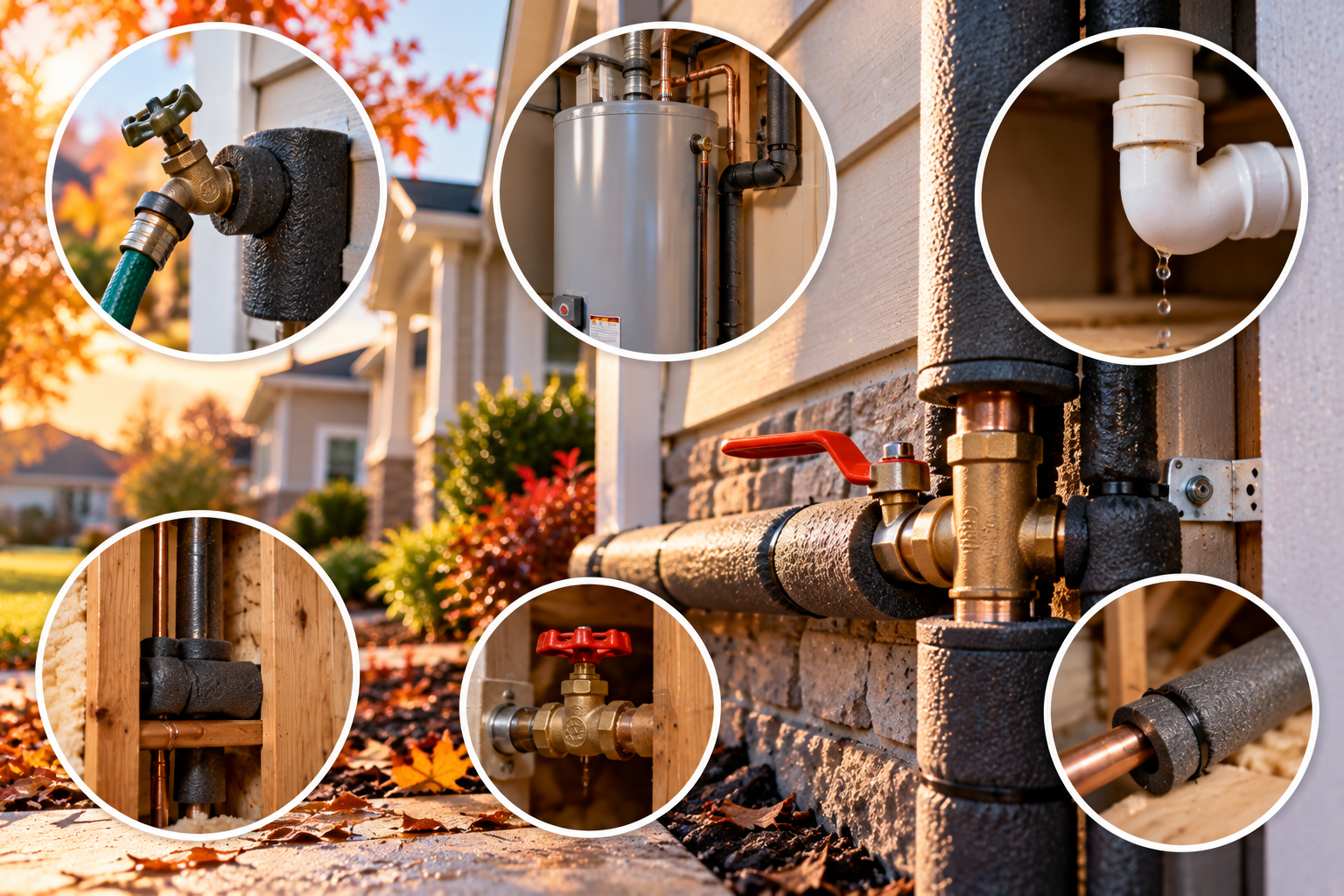
Cooler weather in Orange County is milder than in many parts of the country, but seasonal changes can still expose weaknesses in a plumbing system. Temperature shifts, aging valves, corrosion, water-pressure problems, and existing leaks can all increase the chance of damage when plumbing is already under stress.
Our team approaches pipe protection by looking at the entire plumbing system rather than focusing on one exposed line. Supply connections, shutoff valves, water heaters, hose bibs, drains, and concealed piping all deserve attention. The goal is to identify risk early and keep the system reliable as conditions change.
 Inspect Visible Plumbing Before Cooler Weather Arrives
A seasonal inspection should begin with plumbing that is easy to access. Exposed pipes, fixture connections, angle stops, appliance lines, hose bibs, and water-heater components can all show early signs of wear. Corrosion, mineral buildup, moisture, staining, or a slow drip may indicate that a connection needs professional attention before it worsens.
Our article on plumbing insurance inspections explains why documentation matters when leaks or water damage occur. A professional review can separate visible symptoms from the actual plumbing source and help determine whether repair, replacement, or additional testing is appropriate.
A seasonal checklist should include:
- Checking exposed pipes and fittings for corrosion, staining, or moisture
- Looking around shutoff valves for drips or mineral buildup
- Inspecting appliance supply lines for wear, kinks, or damaged connections
- Reviewing hose bibs and exterior fixtures for leaks or deterioration
- Watching for water-heater corrosion, valve issues, or moisture nearby
- Noting unexplained pressure changes that may indicate a developing problem
Small signs can provide useful clues before a failure becomes obvious. Seasonal checks also make it easier to compare new concerns with earlier plumbing conditions.
Professional evaluation helps confirm whether the issue is limited to one component or connected to a broader plumbing concern.
Pay Attention To Pressure, Water Heaters, And Hidden Leaks
Pipe protection also depends on how the system is operating. Excessive pressure can place added stress on valves, fixtures, supply lines, and concealed piping. Water heaters can develop corrosion, leaks, or valve problems that become more serious if they go unnoticed. Hidden leaks may travel behind walls or beneath flooring before visible damage appears.
Our technicians may use leak detection, pressure testing, fixture inspection, or other diagnostic methods when the source is uncertain. That is especially important when stains, dampness, or recurring water use do not have an obvious explanation.
Important areas to review include:
- Checking whether water pressure feels unusually high or inconsistent
- Watching for unexplained increases in water use or recurring damp spots
- Listening for water movement when fixtures are not in use
- Inspecting around the water heater for rust, moisture, or valve problems
- Looking beneath sinks and cabinets for staining or warped materials
- Scheduling leak detection when moisture appears without a visible source
A concealed plumbing problem can spread moisture well beyond the point where it first becomes visible.
Prepare For Water Damage As Part Of Pipe Protection
Even with preventive maintenance, plumbing failures can still happen. A burst pipe, failed connection, leaking water heater, or damaged supply line can release water into floors, walls, cabinets, and ceilings quickly. That is why pipe protection should include a plan for recognizing and responding to moisture damage as well as maintaining the plumbing itself.
Our guide to pipe-burst moisture explains why stopping the source is only the first step. Water can remain trapped beneath flooring, behind drywall, and inside insulation after the visible leak has been repaired.
A complete seasonal plan should include:
- Knowing where the main water shutoff is located
- Acting quickly when a supply line, valve, or pipe begins leaking
- Checking nearby rooms for water that may have traveled out of sight
- Using moisture readings to determine how far dampness has spread
- Drying affected materials thoroughly before restoration work begins
- Following up when musty odors, staining, or recurring moisture appears
Our team treats plumbing repair and water damage response as connected tasks when a leak affects the building. First, the source must be found and stopped. Then the wet area can be measured, standing water removed, materials dried, and moisture levels confirmed before repairs continue.
Seasonal maintenance is also a good time to review older plumbing components that have already shown signs of wear. Repeated leaks, corrosion, aging valves, and pressure concerns may justify a broader plumbing evaluation rather than waiting for another failure. One-time repairs solve the immediate problem, but long-term reliability depends on understanding why the issue developed.
Cool weather in Orange County may not bring extended freezing conditions, yet seasonal changes still provide a useful reminder to inspect the plumbing system. Preventive attention can help reduce unexpected leaks, water damage, and emergency repairs while keeping the system easier to monitor throughout the year.
Keep Your Plumbing Ready For The Season Ahead
For professional pipe protection, leak detection, plumbing repair, water-heater service, pressure testing, and water damage restoration, contact Tweedy Plumbing and Restoration for an evaluation based on the condition of your property.