

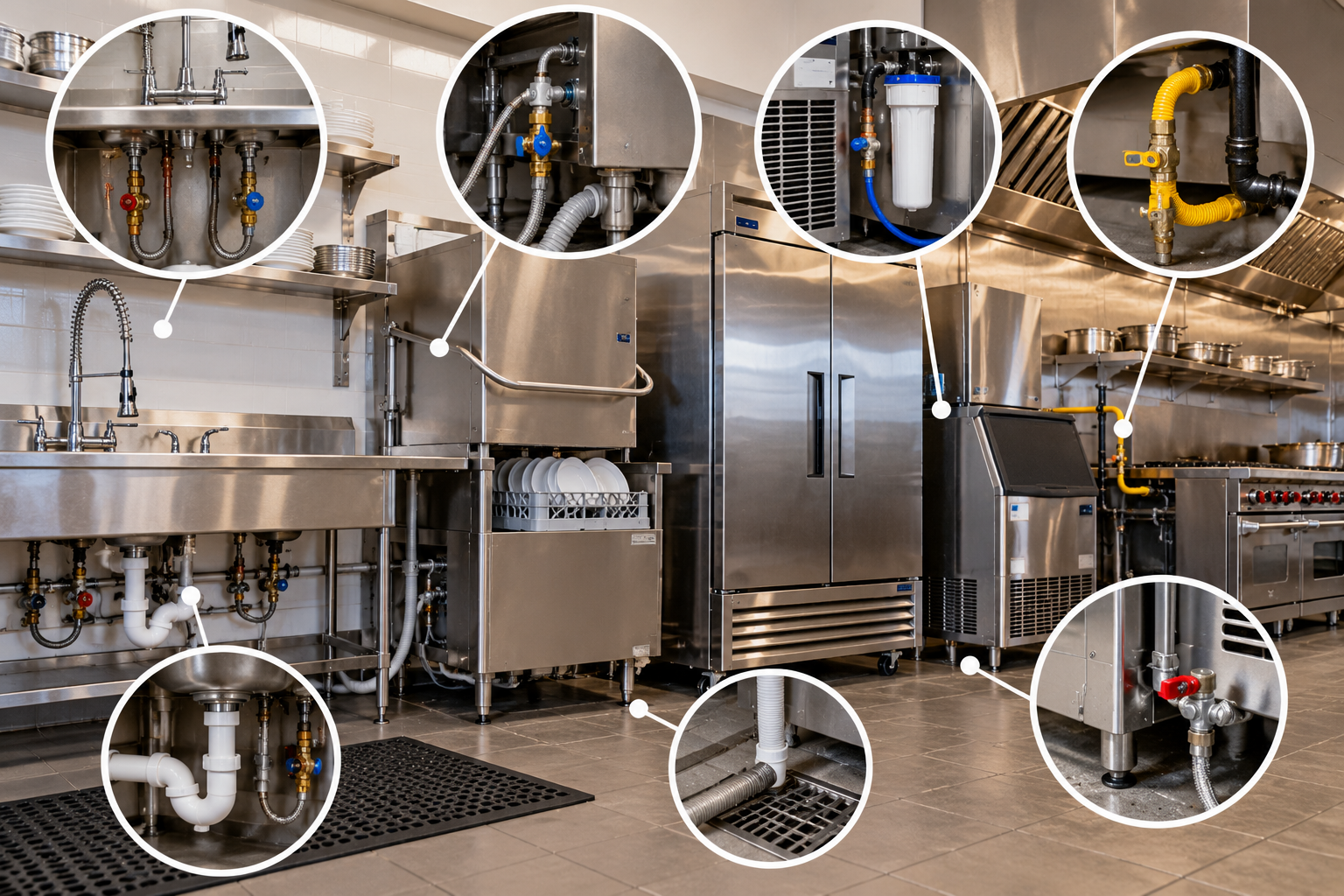
Commercial kitchen appliances depend on more than correct placement. Dishwashers, sinks, refrigerators with water connections, ice makers, water heaters, and other equipment can rely on supply lines, drains, shutoff valves, gas connections, and properly sized plumbing that must work together under heavy daily use. A weak connection can interrupt service, damage nearby finishes, or create a leak behind equipment where it is not immediately visible.
Our team treats appliance hookup tips as part of a larger plumbing assessment. Before connecting equipment, we look at existing infrastructure, expected demand, access for maintenance, drainage, water pressure, and the condition of valves and lines. Professional installation helps confirm that each appliance is connected to plumbing that can support it reliably.
 Check Water, Drain, And Utility Requirements Before Installation
Every commercial appliance has installation requirements that should be compared with the plumbing already in place. A dishwasher may need dependable hot-water supply and drainage, while an ice maker or refrigerator may require a dedicated water connection. Equipment with gas service needs the correct gas line, shutoff, and connection.
A licensed plumber can review:
- Supply-line size and condition before equipment is connected
- Drain location, slope, and capacity for wastewater flow
- Shutoff valves that can isolate the appliance when service is needed
- Water pressure that matches the appliance requirements
- Gas connections where approved commercial equipment requires them
- Access around the unit for future inspection and repair
Our guide to backup warning signs explains why slow drains, gurgling, odors, and wastewater movement can point to a deeper drainage problem. In a commercial kitchen, those symptoms should be checked before new equipment adds more demand.
Plan Connections Around Daily Kitchen Operations
A commercial kitchen cannot always stop operating for extended plumbing work. Installation planning should account for delivery schedules, prep periods, service hours, and the need to keep other sinks, drains, and appliances available whenever possible.
Our technicians look at how the new connection fits into the work area as well as the plumbing system. Good planning can include:
- Scheduling shutoffs during lower-traffic service windows
- Confirming appliance dimensions before plumbing locations are finalized
- Leaving valves and connections accessible after equipment is positioned
- Protecting nearby floors, cabinets, and work surfaces during installation
- Coordinating drain and supply work before final equipment placement
- Testing the completed connection before the kitchen returns to full use
Water heaters also deserve attention in kitchens with high hot-water demand. If a new dishwasher, sink, or other fixture increases usage, the existing heater should be evaluated to make sure capacity and condition are appropriate for the added load.
Test The Hookup Before Putting The Appliance Into Full Service
A completed connection should be tested rather than assumed to be correct. Supply fittings, drain connections, valves, and gas lines can appear secure while still developing leaks under operating pressure or repeated use.
Seasonal guidance on plumbing connection checks highlights the value of inspecting appliance lines, valves, fittings, and exposed plumbing for corrosion, moisture, wear, or pressure concerns. Those same checks are useful when commercial equipment is first connected.
Professional testing may include:
- Running water through the appliance and checking supply fittings
- Watching drain flow for slow discharge, leaks, or backup
- Inspecting shutoff valves for proper operation
- Checking nearby connections for movement or moisture
- Testing gas piping when the appliance uses gas service
- Confirming that surrounding areas remain dry after operation
Small leaks should be taken seriously in a commercial kitchen. Water can move beneath equipment, behind cabinets, and under flooring before staff notice visible damage. Early detection can reduce the chance that a connection problem becomes a larger plumbing and restoration issue.
Long-term reliability also depends on the condition of the existing system. Corroded valves, aging supply lines, recurring drain problems, or weak water pressure may need attention before new equipment is connected. Installing new equipment onto compromised plumbing can simply move an old problem into a new location.
Commercial kitchens also place heavier demand on drains than typical residential spaces. Grease, food debris, frequent washing, and continuous fixture use can contribute to buildup. If drains already run slowly, professional drain cleaning, camera inspection, or other diagnostic work may be appropriate before the appliance becomes part of the daily workflow.
The strongest installation plan combines correct placement, licensed plumbing work, testing, and future access. Professional evaluation helps determine whether existing connections are suitable or whether valves, piping, drains, or water-heating components need repair or replacement first. That broader review can reduce avoidable disruption after the kitchen returns to full operation.
Commercial appliance hookups also need to account for future service. Equipment may eventually need to be moved, repaired, replaced, or isolated without shutting down an entire kitchen. Accessible shutoff valves, clearly routed connections, and properly supported lines make those future tasks easier. Planning for serviceability during installation supports safer maintenance and reduces unnecessary downtime later.
Connect New Equipment With Fewer Plumbing Surprises
For commercial appliance installation, plumbing connections, drain service, leak detection, water-heater work, or related repairs, contact Tweedy Plumbing and Restoration for professional support based on the needs of your kitchen and property.