

Hard water is common in many Southern California homes, and its effects usually build slowly. Calcium and magnesium can collect inside supply lines, fixtures, valves, water heaters, and drains. Over time, those deposits may restrict flow, strain plumbing components, and make existing corrosion or wear more noticeable.
Hard water does not damage every pipe in exactly the same way. Pipe material, age, water chemistry, pressure, and previous repairs all influence how quickly problems develop. Professional plumbing evaluation helps separate ordinary scale buildup from deeper pipe damage so homeowners can address the actual cause instead of reacting only to visible residue.
 Mineral Buildup Gradually Changes How Pipes Perform
Hard-water minerals can settle on interior surfaces as water moves through the plumbing system. Thin deposits may seem harmless at first, but repeated accumulation can narrow the usable diameter of a pipe and create rough surfaces that affect flow.
Common signs include:
- Water pressure becoming weaker at several fixtures
- White or chalky residue around faucets and valves
- Showerheads or aerators clogging more frequently
- Hot-water performance becoming less consistent
- Recurring buildup around plumbing connections
- Older pipe sections showing visible mineral deposits
The guidance on hidden leak signs shows why pressure changes, stains, and unexplained moisture should be evaluated as part of the larger plumbing system.
Corrosion And Scale Can Affect Aging Pipes Differently
Mineral scale and corrosion are related plumbing concerns, but they are not the same process. Hard water primarily leaves mineral deposits. Corrosion involves the gradual deterioration of metal, and its rate depends on factors such as pipe material, water chemistry, oxygen exposure, temperature, age, and existing surface condition.
In older galvanized or steel piping, mineral buildup can develop alongside rust and internal deterioration. Scale may also hide the condition of the metal beneath it, making the remaining wall thickness difficult to judge from appearance alone.
Copper, brass, valves, fittings, and water-heater connections can develop their own forms of wear. Professional inspection is more useful than assuming every white deposit means corrosion. Plumbers can evaluate the material, leak history, pressure, and condition before recommending repair.
Watch For Signs That Pipe Damage Is Progressing
Pipe damage often develops gradually before a major leak occurs. Homeowners may first notice small performance changes rather than an obvious plumbing failure.
Warning signs can include:
- Pinhole leaks developing in older supply lines
- Rust-colored water from aging metal pipes
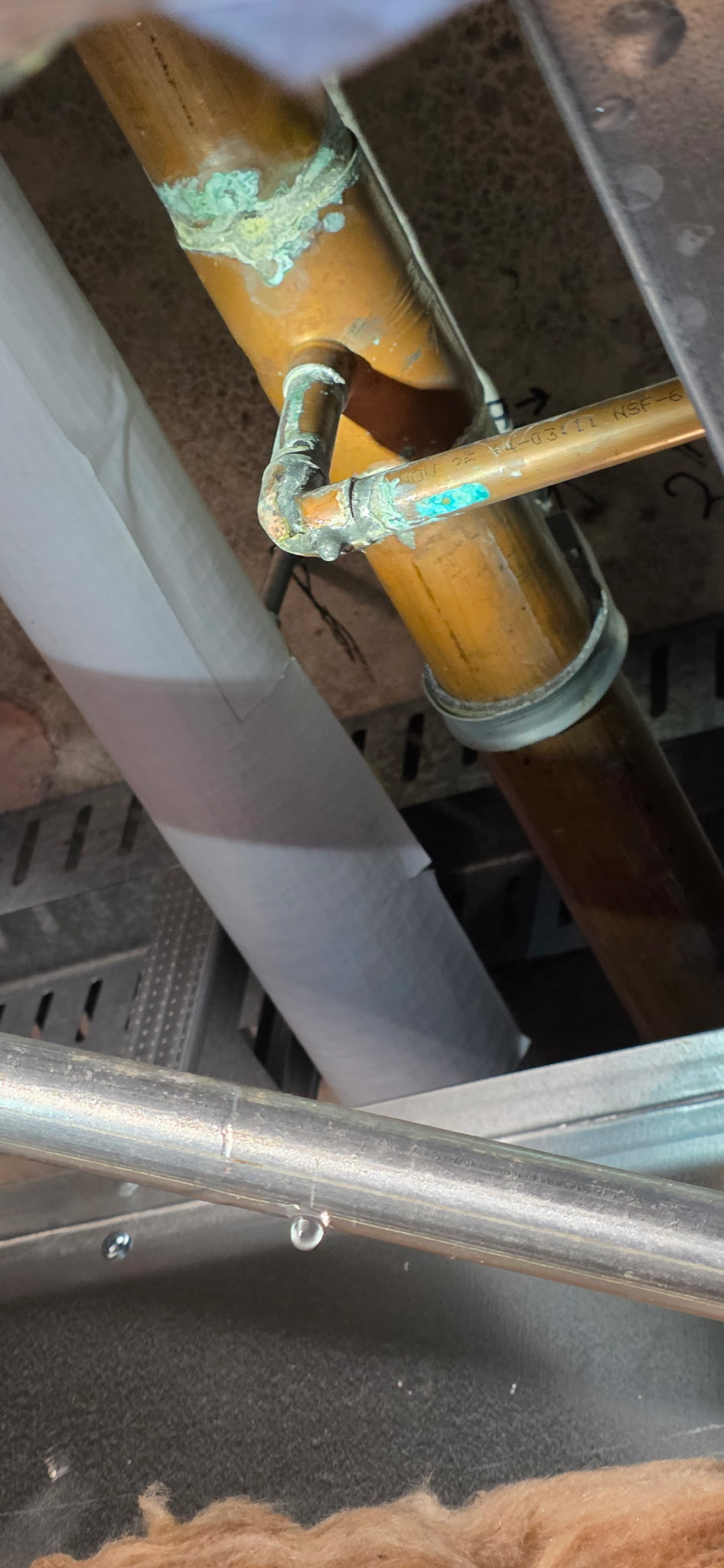
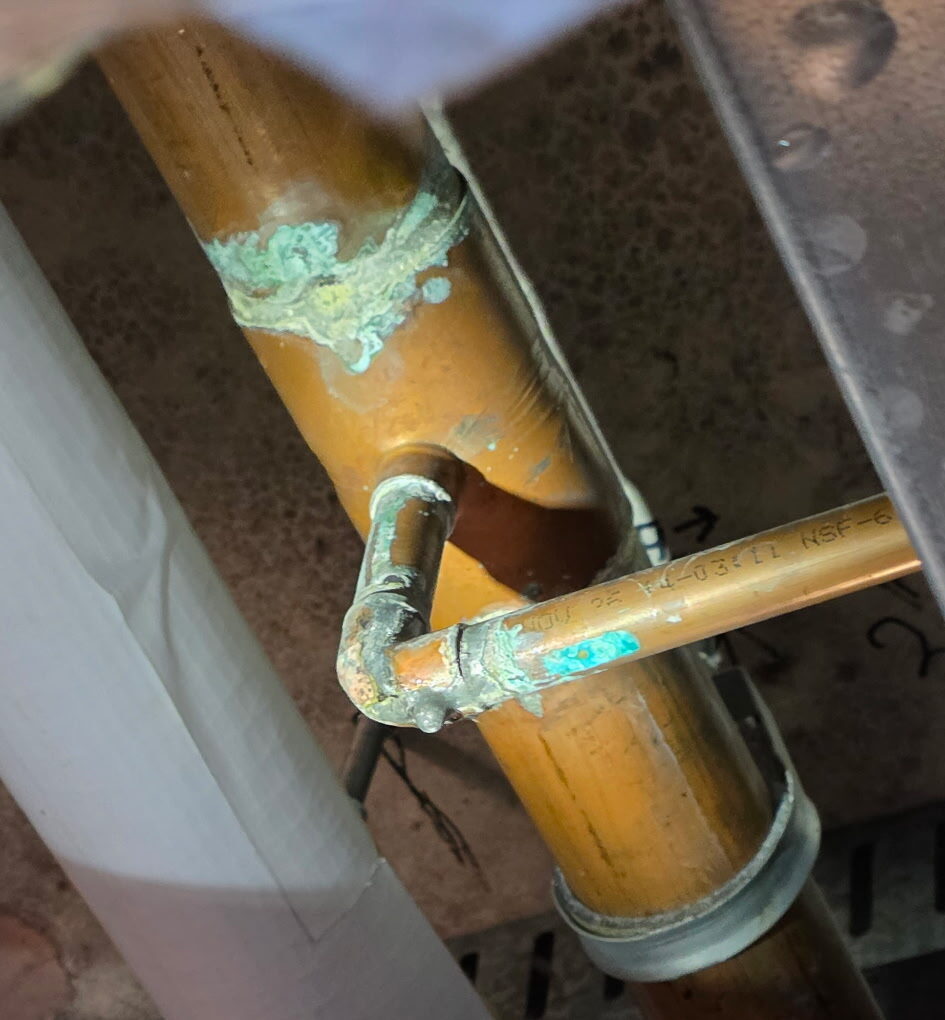
- Green, blue, or white deposits around fittings
- Pressure dropping throughout several rooms
- Damp areas appearing near concealed plumbing
- Repeated repairs in different parts of the home
A single symptom does not prove that hard water is the only cause. Corrosion, aging materials, mineral buildup, pressure problems, and joint deterioration can overlap.
Professional diagnosis helps determine whether the issue is localized or system-wide. That distinction matters because repairing one fitting can be appropriate when damage is isolated, while widespread deterioration may require a different long-term strategy.
Repeated Repairs May Point Toward A Repiping Decision
When leaks begin occurring in multiple locations, repeated patch repairs can become less practical. A home may have several aging sections that are deteriorating at similar rates, especially when mineral-heavy water, corrosion, and long-term wear have affected the system for years.
A discussion of repiping decisions explains why plumbers consider pipe material, leak frequency, pressure, water quality, access, and previous repair costs before recommending larger replacement work.
Repiping should not be based on hard water alone. One leak or one area of scale does not automatically justify replacing the entire plumbing system. Professional evaluation helps compare targeted repair with partial or whole-home repiping.
Long-Term Protection Starts With Understanding The Whole System
Managing hard-water-related pipe damage requires more than removing visible mineral residue. The plumbing system should be evaluated for performance, material condition, leaks, pressure changes, and recurring problem areas.
A complete professional approach may include:
- Inspecting exposed pipes, fittings, valves, and connections
- Evaluating pressure across multiple fixtures
- Checking for concealed or recurring water leaks
- Reviewing pipe age, material, and repair history
- Assessing mineral buildup and water quality concerns
- Recommending repair or repiping based on confirmed conditions
This whole-system view helps avoid unnecessary work. A pressure problem caused by mineral restriction requires a different response than a leaking joint, a corroded pipe wall, or a failing water-heater connection.
Hard water can contribute to long-term plumbing wear by leaving scale that restricts flow, affects components, and complicates aging pipe systems. Corrosion can develop alongside those conditions, particularly in older metal piping, but the underlying cause should always be confirmed before repairs begin.
Professional plumbing inspection makes that process more efficient. By connecting water quality, pipe material, pressure, leak history, and visible deterioration, plumbers can determine whether the problem calls for a focused repair, broader maintenance, or a repiping plan designed around the condition of the entire system.
Protect Your Plumbing Before Small Changes Become Major Repairs
If you are noticing mineral buildup, pressure changes, recurring leaks, or other signs of pipe damage, contact Tweedy Plumbing and Restoration for professional inspection, leak detection, plumbing repair, and repiping evaluation.