

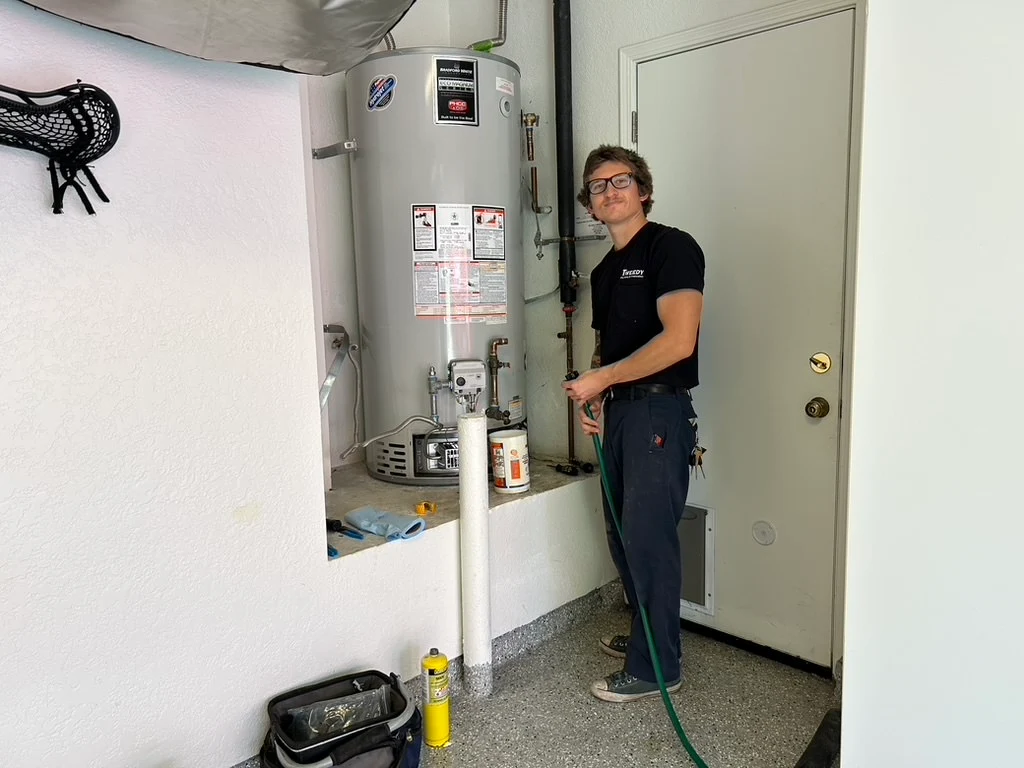
A water heater works every day, often without much attention until hot water becomes inconsistent, energy use rises, or a leak appears. Regular water heater maintenance helps identify developing problems before they turn into expensive repairs, property damage, or premature replacement.
Professional service also supports better efficiency. Sediment, worn components, corrosion, and incorrect settings can force a system to work harder than necessary. A trained plumber can evaluate the equipment, explain what is affecting performance, and recommend service based on the unit’s age, fuel type, condition, and household demand.
Annual Maintenance Helps Prevent Costly Breakdowns
Most water heaters benefit from professional service once a year. Regular evaluation gives a plumber an opportunity to find small concerns while the system is still operating instead of waiting for a complete loss of hot water.
A maintenance visit may include:
- Checking the tank, connections, valves, and visible piping for leaks or corrosion.
- Testing temperature and pressure-related components for proper operation.
- Evaluating unusual noises, temperature changes, or slow recovery.
- Looking for sediment buildup that may reduce heating efficiency.
- Reviewing the system’s age and overall condition for future planning.
Catching a worn valve, loose connection, or developing leak early can reduce the chance of emergency service. It can also protect nearby flooring, drywall, cabinets, and stored belongings from water damage.
Valve Checks Help Protect The Whole Plumbing System
The water heater does not operate separately from the rest of the home. Shutoff valves, supply lines, fixtures, and connected piping all affect how water is controlled during maintenance or a leak.
A professional valve evaluation can reveal corrosion, stiffness, dripping, poor placement, or components that may not close fully when needed. If a valve fails during a water-heater problem, water may continue spreading while the homeowner searches for another way to stop the flow.
Evaluating these connected parts helps make future repairs more efficient. It also reduces the risk that a relatively small water-heater issue becomes a larger plumbing or restoration expense.
Sediment And Scale Can Increase Energy Costs
Traditional tank water heaters can collect sediment as minerals settle at the bottom of the tank. This layer may interfere with heat transfer, contribute to rumbling or popping noises, and make the burner or heating elements run longer.
Professional maintenance may help by:
- Assessing whether flushing is appropriate for the unit’s age and condition.
- Checking for scale around fittings, valves, and heating components.
- Looking for signs of rust-colored water or internal deterioration.
- Confirming that temperature settings support efficiency and household needs.
- Identifying whether recurring buildup points to broader water-quality concerns.
Tankless systems also require maintenance. Mineral scale can restrict internal passages and reduce performance. Proper descaling and inspection should follow the manufacturer’s requirements and the condition of the system rather than a one-size-fits-all schedule.
Professional Diagnosis Avoids Repeated One-Time Fixes
A drop in hot-water supply may come from sediment, a failing thermostat, a damaged heating element, burner trouble, pressure concerns, or an aging tank. Replacing one visible component without confirming the cause can lead to repeated expenses.
This discussion of professional plumbing value explains why diagnosis, correct tools, code awareness, and system-level evaluation matter. Water heaters involve electricity, gas, pressurized water, venting, temperature control, and safety components. Incomplete work may affect more than comfort.
A licensed plumber can determine whether maintenance, repair, or replacement offers the better long-term value. That guidance helps homeowners avoid investing repeatedly in a unit that is near the end of its useful service life.
Maintenance Can Extend Equipment Life
Water heaters experience daily heating cycles, pressure changes, mineral exposure, and ordinary component wear. Maintenance cannot make equipment last forever, but it can reduce avoidable stress and help the system deliver more dependable performance.
Long-term savings may come from:
- Reducing energy loss caused by sediment or scale buildup.
- Correcting small leaks before they damage the unit or surrounding materials.
- Replacing worn components before they contribute to a larger failure.
- Preserving reliable hot-water delivery and recovery time.
- Planning replacement before an emergency limits available options.
Age remains an important factor. A system that breaks down frequently, leaks from the tank, or requires major repairs may be more economical to replace. Professional water heater maintenance creates a service record that makes this decision easier because the plumber can compare current condition with earlier findings.
The greatest savings often come from predictability. Scheduled maintenance allows homeowners to budget for service, understand the system’s condition, and prepare for replacement rather than reacting to an unexpected breakdown. It also helps protect against secondary expenses involving cleanup, water damage, and disrupted household routines.
For gas, electric, traditional, or tankless equipment, maintenance should match the manufacturer’s requirements and the system’s actual condition. Property-specific service avoids unnecessary work while keeping safety, efficiency, and dependable performance at the center of each recommendation.
Protect Your Hot Water And Your Budget
Regular maintenance can support efficiency, reliability, and better long-term planning. Contact Tweedy Plumbing and Restoration for professional water heater maintenance, repair, installation, replacement, and plumbing guidance tailored to your home.